Abysscuits.
A high-interaction bluffing and treasure-hunting game for 3–5 players. Read your friends, twist the odds, outsmart your crew.
Where it started
The first question I ask on any development project is: what's fun here? Who is it for?
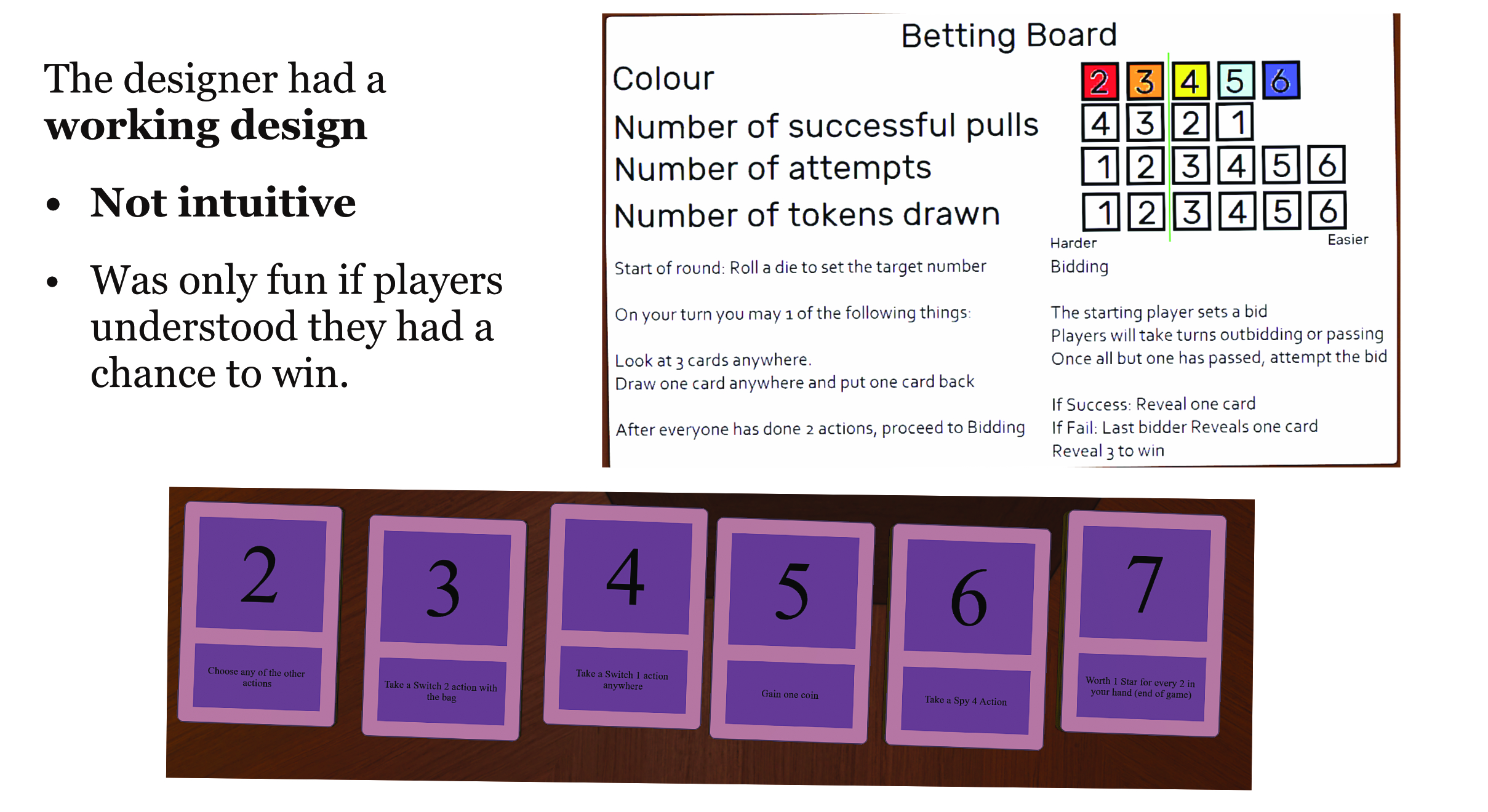
On Abysscuits, it started as bidding tension. The push and pull of making the bet harder for other players while developing a tactic that meant you could still attempt it yourself. The designer had arrived at something genuinely interesting: a social puzzle with a bidding mechanic at its core.
The challenge was that outside that core mechanic — a turn or two of either looking at a central deck or swapping cards from your hand into it — the game was bare. Numbered and coloured cards, a bidding board with four sliders. There wasn't much of a theme even implied. I had to find a hook for potential players.
Hiding the game inside the game
There was strategy here, but it was hard to identify. The first thing we needed was more to work with. I suggested adding lives — resources players could spend to retry after a failed draw — and a secondary points path: betting on whether the searching player would succeed or fail. Both additions went over well in testing. They added rules, but felt like natural concepts once explained. The game got richer without getting heavier.
This is an information game: players who know more about the deck, or about other players' resources, can make a better bid. The challenge was how to open it up and make the game less about card and point counting. We tested many approaches — variable points, poker-style scoring — but they all came out convoluted. The solution was simpler: hide the points, the same way the other information was already hidden. With all of that in place, the question became: what theme could tie it all together?
Finding the theme
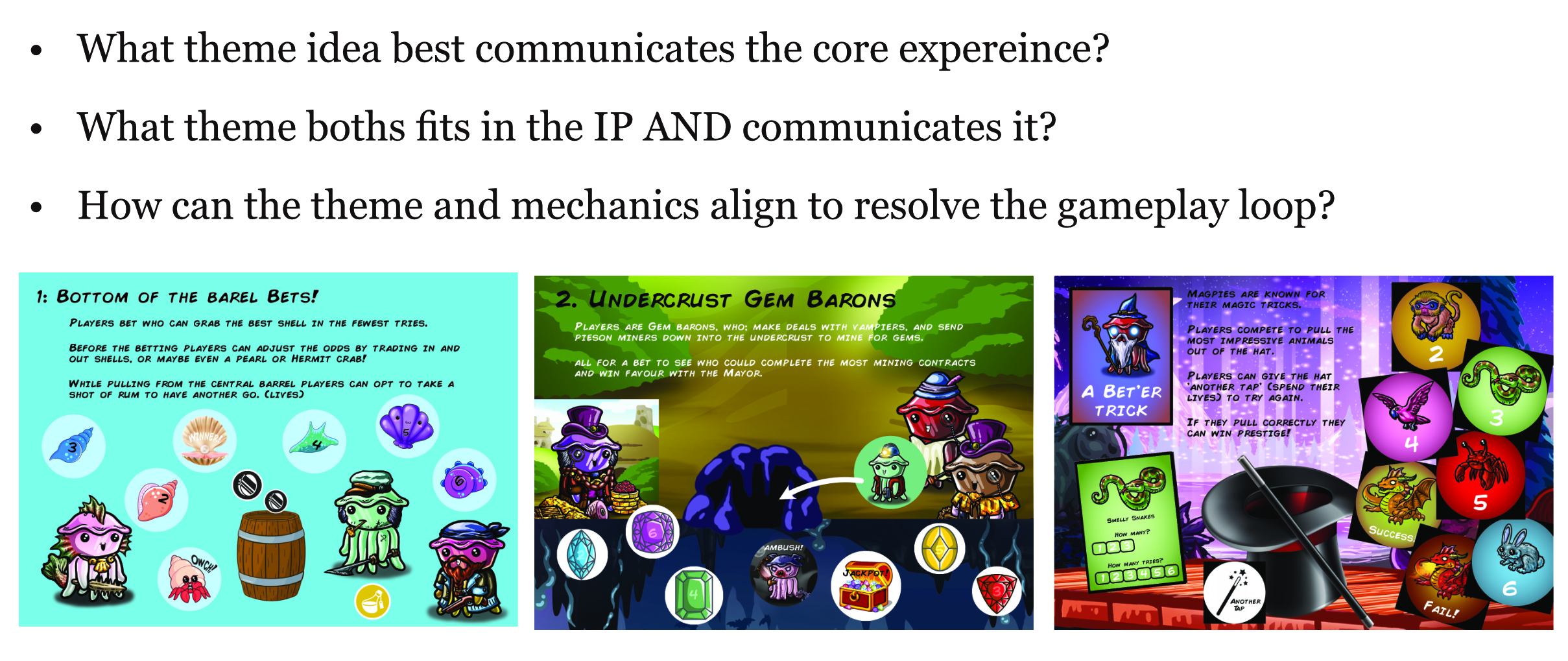
I tried gem barons making bids on mining contracts. It didn't communicate anything. I tried magicians pulling increasingly strange animals from a hat, inspired by the core mechanic of searching a central bag for specific tokens. It was evocative, but the betting and lives mechanics didn't fit.
The game became a pirate game. Players diving below the depths, searching for treasure demanded by the captain, hiding their winnings from each other. It worked because the tactics players were already using felt like what a sneaky pirate would actually do. Instead of figuring out who someone is, you're figuring out whether they made the treasure easier or harder to find. That changes how you should bid depending on what you know.
Lives became coins spent on another attempt. Points became buried treasure. The hidden information needed a physical home, which became a fold-up chest, and later a loot bag for each player.
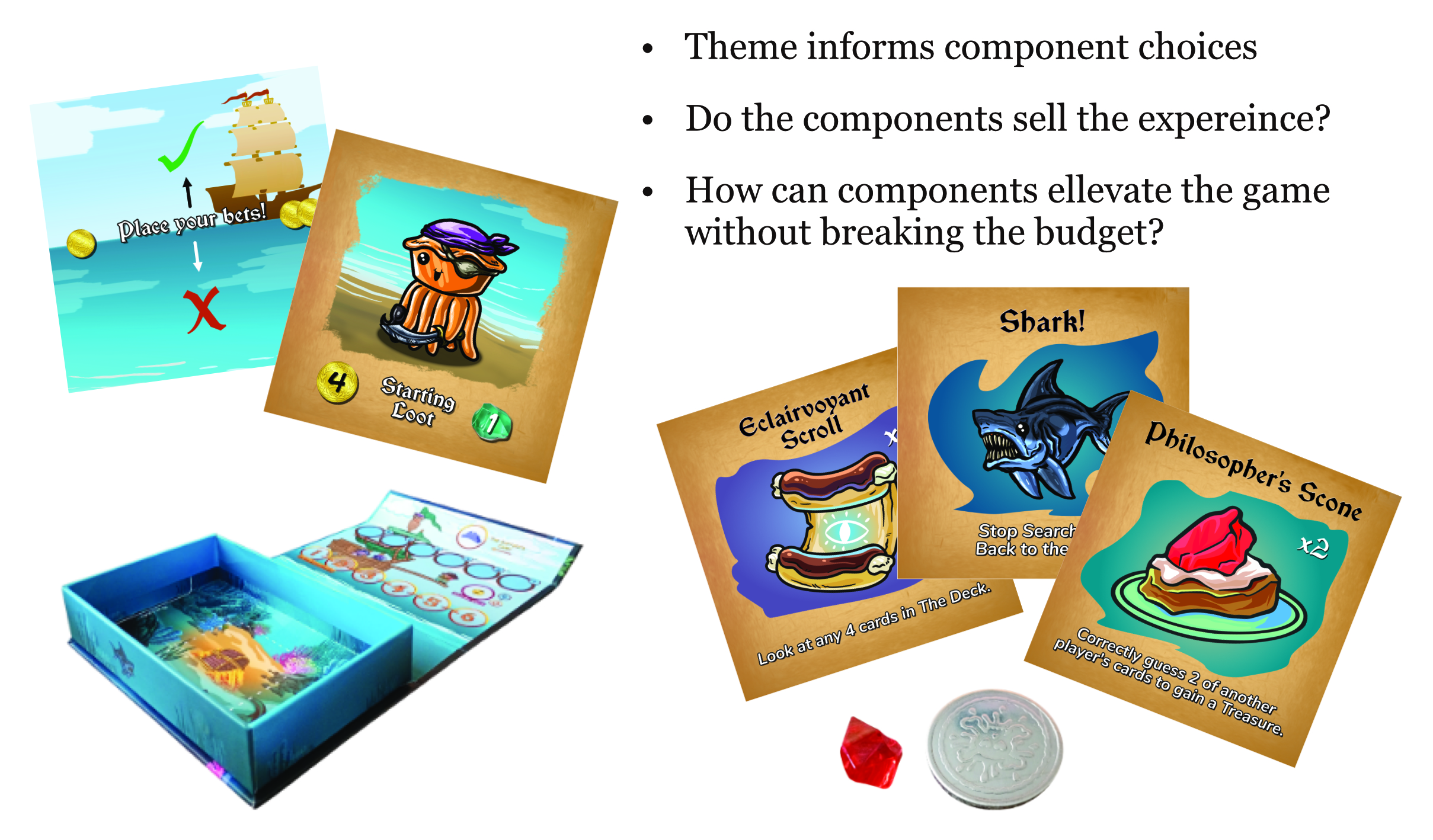
With the artist less available for this project, I took on illustration and concept development myself, producing the final artwork for the cards, box, and coins. The pirate theme gave me something to work with: tactile, characterful, with room for the Pieland brand's humour.
Pirate treasure, but food puns
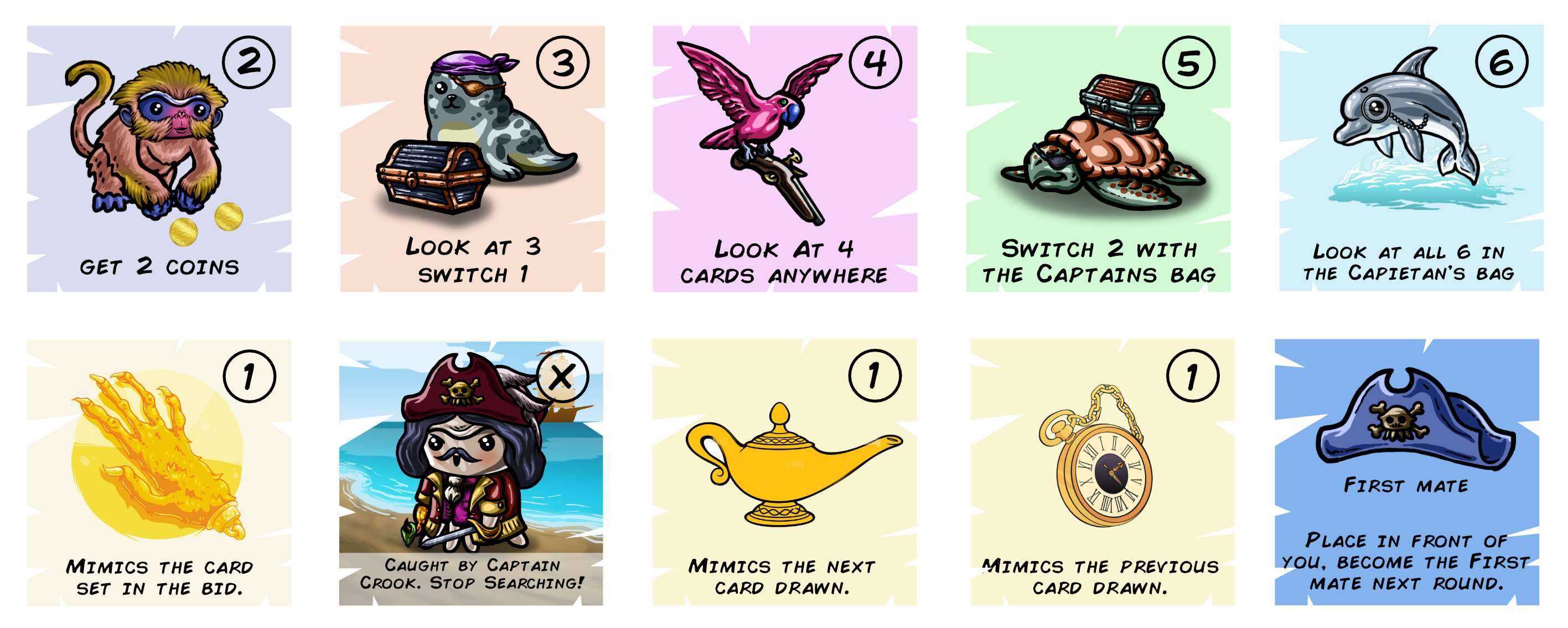
For the first iteration of cards in the pirate theme, I used artwork from the artist, imagining the pirates making schemes to acquire the captain's treasure using various animals. We liked the cards, but it was an odd angle.
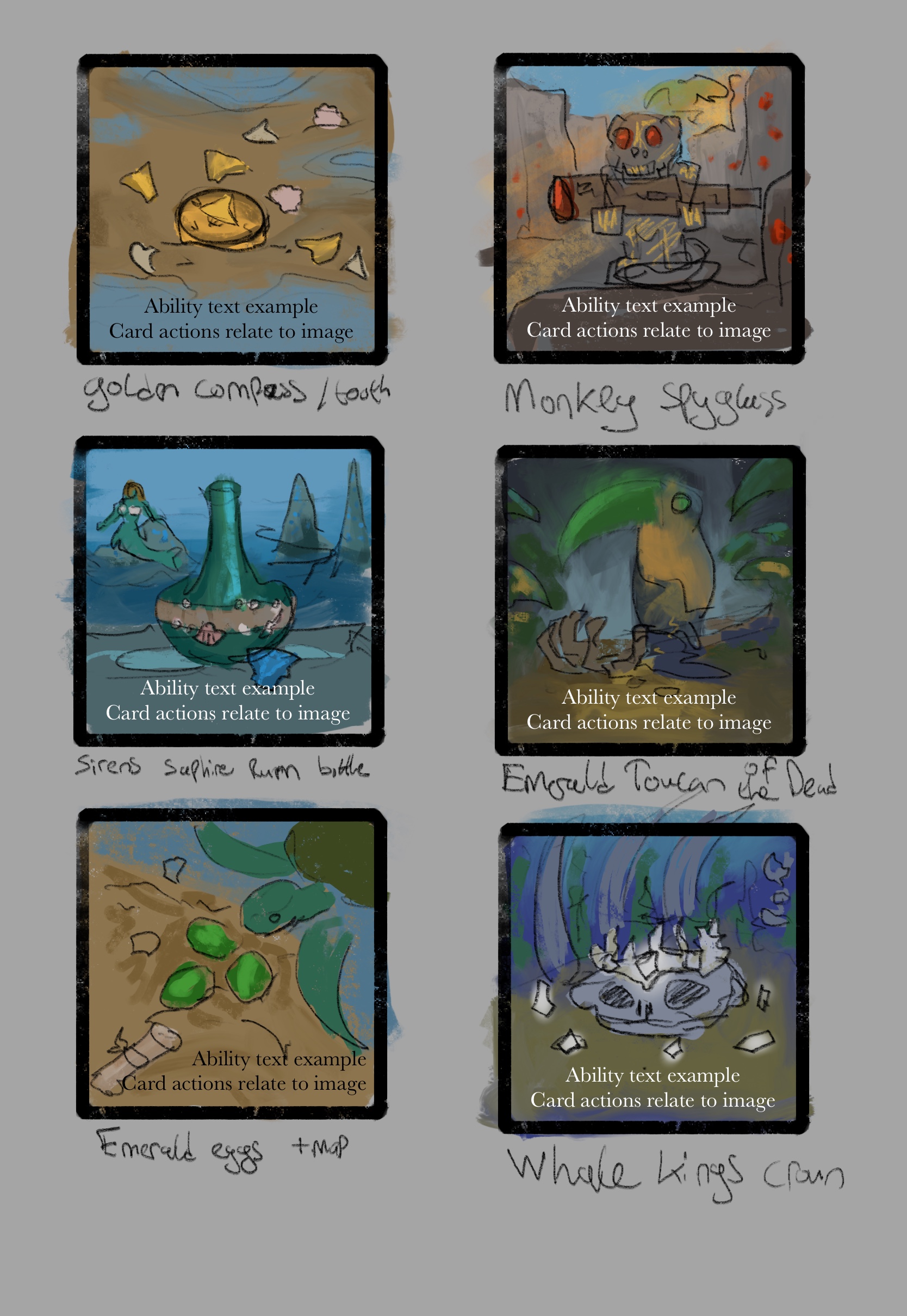
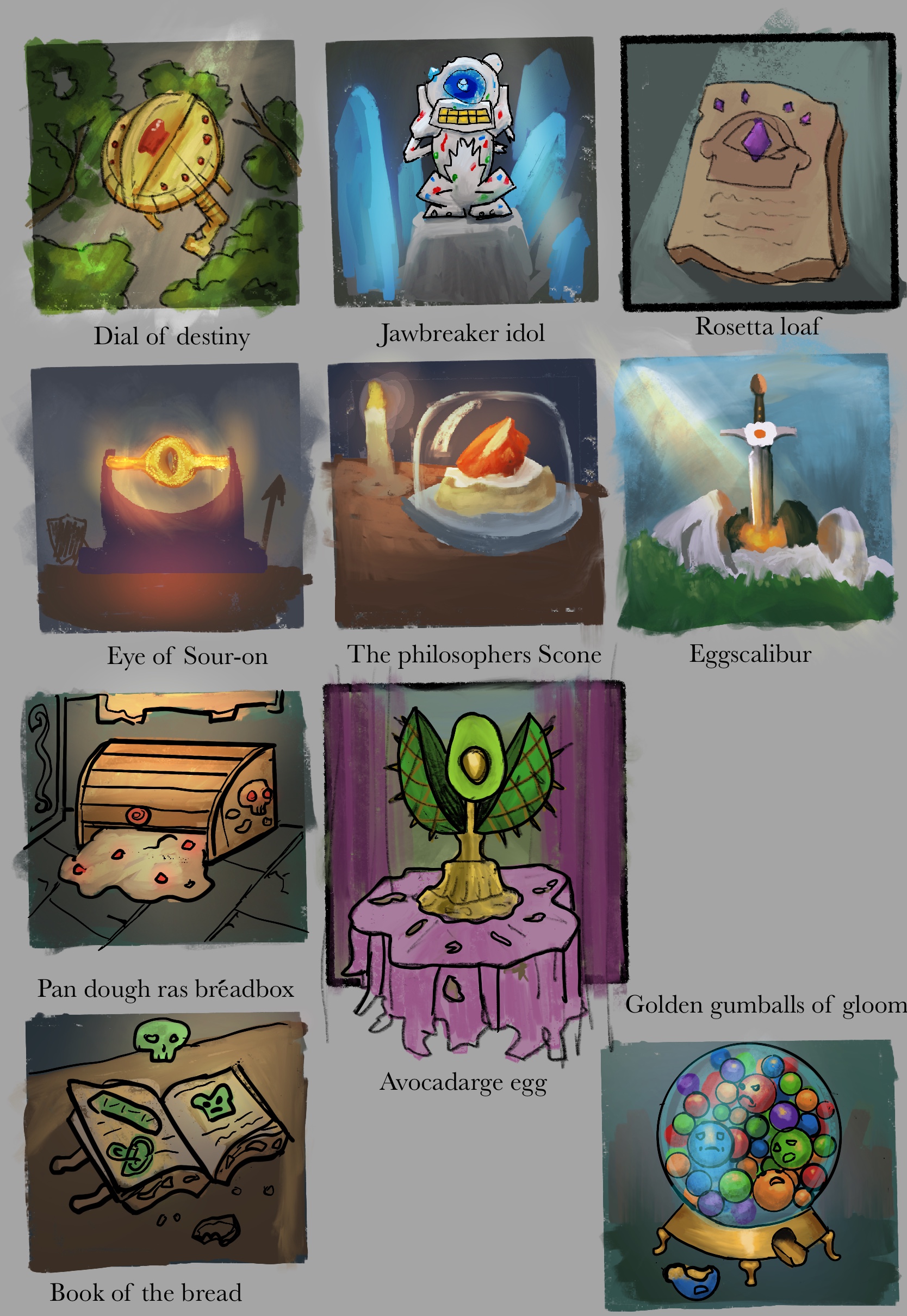
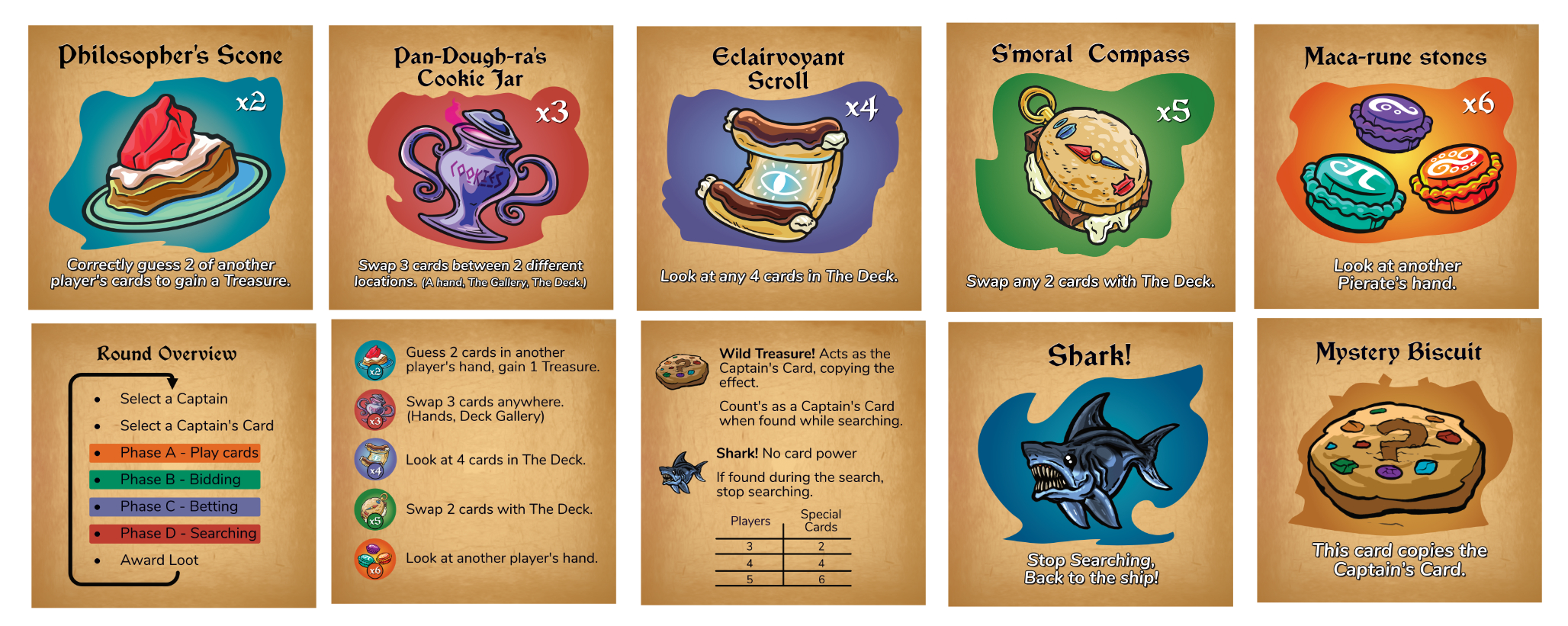
The feedback told us the cards needed to be the riches the pirates are looking for — distinct, memorable, and with a pun. Here's the final set.
Tokens or cards?
The central component players search through spent time as both tokens and cards. Tokens were tactile, naturally shuffled well in a bag, and that bag doubled as storage for the whole game. Cards gave more space for artwork and mechanical explanations, which became more relevant once we introduced effects giving each card type a different way of interacting with the deck.
In the end cards fit the pirate betting game feel, and the artwork helped players remember what they had seen in the deck during a search.
The teaching problem
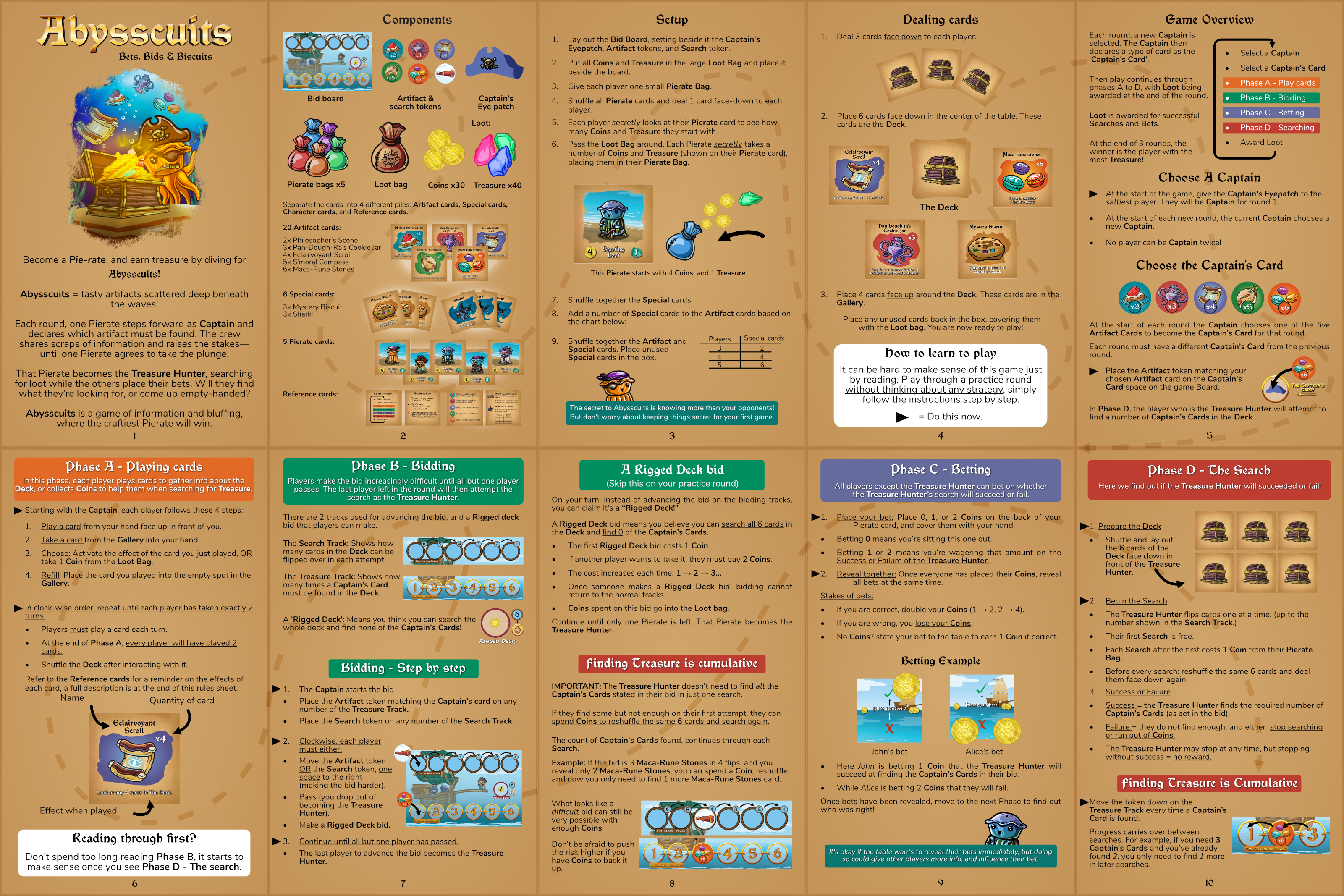
Abysscuits is short and fun, but proved difficult to teach cold. It is a game that only makes sense once you have seen how a round ends. I developed a teaching-focused rules sheet combining text and graphic techniques, and designed player aids covering flow of play and card effects. Combined with some simplification to the overall system, over 90% of playtesters rated learning the game between neutral and easy.
Designing a rulebook is about giving players the fastest route to playing and having fun, and that consideration shapes design decisions, artwork, and component choices.